10 Warning Signs of Mold Toxicity
Mold in a home does not always announce itself with a visible patch on the wall. Some people notice allergy or respiratory symptoms when they spend time in a damp or moldy environment, while others may have no symptoms at all.
This guide covers ten symptoms or patterns that people may notice in connection with mold or damp indoor environments. It also explains which effects are better established and which symptoms can have many other possible causes.
If you are concerned that mold may be affecting your health, reducing exposure and speaking with a healthcare professional are more reliable steps than trying to diagnose the cause from a symptom checklist alone.
What Mold Exposure Actually Means
Mold exposure occurs when people come into contact with mold spores or other particles from mold in the environment. According to the CDC, exposure to damp and moldy environments can cause allergic reactions and respiratory symptoms, particularly in people who are sensitive to mold or have asthma.
Mold allergy is a recognized medical condition. Symptoms can include stuffy or runny nose, sneezing, coughing, wheezing, and itchy or watery eyes.
You may also see the term “mold toxicity” used broadly online. Claims that mold exposure causes a wide range of unexplained symptoms are more complicated and less established than the well-documented allergic and respiratory effects of mold.
Symptoms such as fatigue, headaches, and difficulty concentrating can have many possible causes. They should not automatically be attributed to mold without proper medical evaluation.
With that context, here are ten symptoms or patterns worth paying attention to if you suspect a damp or moldy indoor environment.
1. Constant Sneezing, Runny Nose, or Congestion
Sneezing, a runny nose, stuffiness, and nasal irritation are among the more established symptoms associated with mold allergies and exposure to damp indoor environments.
These symptoms can occur when a person who is sensitive to mold inhales airborne mold particles.
The timing can provide a useful clue. If nasal symptoms repeatedly become worse while you are in a particular building and improve after spending time elsewhere, mention that pattern to your doctor. However, this pattern alone does not prove that mold is the cause.
2. Coughing, Wheezing, or Shortness of Breath
Mold and damp indoor environments can irritate the respiratory system. People with asthma may be particularly sensitive to indoor allergens, including mold.
Possible symptoms include coughing, wheezing, chest tightness, or difficulty breathing.
If breathing problems are persistent or severe, do not assume mold is the only possible cause. A healthcare professional can help determine what is causing the symptoms and whether additional testing or treatment is needed.
3. Red, Itchy, or Watery Eyes
Itchy, red, or watery eyes can occur as part of an allergic reaction to airborne mold particles.
Eye irritation may appear together with sneezing, congestion, or other allergy symptoms. If symptoms repeatedly occur in a particular indoor environment, that information can be useful when discussing the problem with a healthcare professional.
Persistent or severe eye symptoms should also be evaluated for other possible causes.
4. Persistent Headaches
Headaches are sometimes reported by people who spend time in damp or moldy buildings, but they are not as specific to mold exposure as respiratory or allergy symptoms.
Headaches can result from many different factors, including dehydration, stress, sleep problems, allergies, medications, and other health conditions.
If headaches repeatedly occur in a particular environment or improve after leaving that environment, keep track of the pattern and discuss it with a healthcare professional rather than assuming mold is responsible.
5. Fatigue That Does Not Improve With Rest
Fatigue is frequently reported by people who believe their symptoms are connected to damp or moldy buildings, but tiredness is not specific to mold exposure.
Poor sleep, stress, infections, medications, nutritional problems, and many other conditions can cause ongoing fatigue.
If fatigue occurs along with more established allergy or respiratory symptoms, or if you notice a consistent pattern between your symptoms and a particular indoor environment, discuss those observations with your doctor.
6. Skin Rashes or Irritation
Some people can experience skin irritation or allergic reactions after contact with mold or other environmental allergens.
Possible symptoms can include redness, itching, or irritation.
Skin problems can have many causes, however, so a rash does not by itself indicate mold exposure. If symptoms continue or become severe, seek medical advice to determine the underlying cause.
7. Ongoing Nasal or Sinus Symptoms
Exposure to damp or moldy indoor environments can be associated with nasal and upper-respiratory symptoms, particularly in people with allergies or sensitivities.
Ongoing congestion, sinus pressure, or other nasal symptoms can also have many causes, including allergies, infections, and other environmental irritants.
If you experience repeated or persistent sinus problems, speak with a healthcare professional instead of assuming that mold is responsible. If you also suspect moisture or mold in your home, addressing the indoor environment can be an important part of the process.
8. Difficulty Concentrating or Brain Fog
Difficulty concentrating or feeling mentally foggy is often discussed in connection with mold exposure online. Some people report experiencing these symptoms while spending time in damp or moldy buildings.
However, cognitive symptoms are less specific to mold than respiratory and allergy symptoms and can have many possible causes.
If you experience difficulty concentrating, discuss it with a healthcare professional. A mold inspection cannot determine whether a symptom such as brain fog was caused by mold exposure.
9. Symptoms That Consistently Worsen Indoors
The location and timing of symptoms can provide useful information.
For example, you may notice that congestion, coughing, eye irritation, or other symptoms become worse after spending several hours in your home and improve after being away.
This pattern can be a clue that something in the indoor environment may be contributing to your symptoms, but it does not identify mold as the cause by itself.
Other indoor factors, including dust, pet allergens, cleaning products, poor ventilation, and other irritants, can produce similar symptoms.
If you notice a consistent pattern, consider discussing it with your doctor and checking your home for moisture problems.
10. Signs of a More Serious Reaction
Most mold-related health effects discussed by public health agencies involve allergic, respiratory, or irritation symptoms. People with asthma, mold allergies, certain chronic lung conditions, or weakened immune systems may be more vulnerable to complications from mold exposure.
Seek prompt medical attention for serious symptoms such as:
- Significant difficulty breathing
- Chest pain
- Severe allergic symptoms such as swelling or widespread hives
- Fainting or severe weakness
- A high fever or other symptoms that require urgent medical evaluation
Do not try to determine the cause of serious symptoms through a home mold inspection alone. Medical symptoms should be evaluated by an appropriate healthcare professional.
Who Is Most Affected
Mold exposure does not affect everyone in the same way. People who may be more sensitive to mold or damp indoor environments include:
- People with mold or other environmental allergies
- People with asthma
- People with certain chronic lung conditions
- People with weakened immune systems
- People who spend significant amounts of time in damp or poorly ventilated spaces
If someone in your household has a condition that makes them more sensitive to environmental allergens, discuss persistent symptoms with their healthcare provider and address any moisture problems in the home.
What To Do If You Recognize These Signs
Talk to a doctor. If you have persistent allergy, respiratory, skin, or other symptoms, a healthcare professional can help identify possible causes. People with suspected mold allergies may be evaluated through appropriate allergy testing.
Do not rely on symptom checklists alone. Symptoms such as headaches, fatigue, and difficulty concentrating have many possible causes. A list of symptoms cannot confirm mold exposure or a mold-related illness.
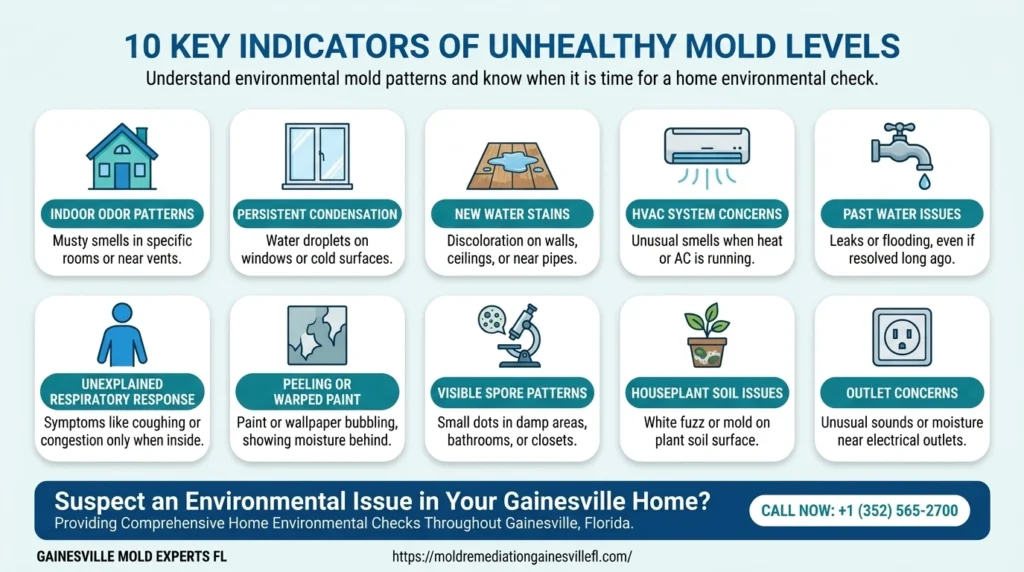
Check your home for moisture. Look for leaks, condensation, water stains, musty areas, and other signs of excess moisture. Mold needs moisture to grow, so finding and correcting the moisture source is an important part of addressing a mold problem.
Get a professional inspection when appropriate. If mold is hidden, keeps returning, or is associated with significant water damage, a professional inspection can help identify affected areas and possible moisture sources.
Fix the moisture problem. Cleaning visible mold without addressing the water or moisture source can allow the problem to return.
Be cautious about unproven detox treatments. Be careful with products or programs that promise to remove “mold toxins” from the body or diagnose illness through unvalidated testing. If you are concerned about health effects from mold, discuss your symptoms with a qualified healthcare professional and focus on addressing the environmental exposure.
Why This Matters in Gainesville
Gainesville’s warm, humid climate can create favorable conditions for moisture problems when water enters a home or indoor humidity remains high.
UF/IFAS climate data for Gainesville shows average relative humidity around 70% in April and about 77% in August, with maximum humidity readings that can approach 100%.
For homeowners, the important issue is not humidity alone. Leaks, condensation, roof damage, plumbing problems, poor ventilation, and other sources of moisture can create conditions where mold grows.
Mold can develop in places that are not immediately visible, including behind walls, beneath flooring, in attics, bathrooms, and areas around HVAC systems.
If you notice persistent moisture, musty odors, visible mold, or symptoms that seem to change depending on where you spend time, checking the property for moisture problems can help identify whether an indoor environmental issue needs attention.
Frequently Asked Questions
Is mold toxicity a real medical diagnosis?
Mold allergies and other health effects associated with damp or moldy environments are recognized by public health and medical organizations. The broader term “mold toxicity” is used in different ways online and should not be treated as a diagnosis based on symptoms alone. If you are concerned about symptoms, speak with a healthcare professional.
Can mold exposure cause permanent health damage?
Health effects vary depending on the person, the type and extent of exposure, and other health factors. Many mold-related allergy and respiratory symptoms improve when exposure is reduced or removed. People with asthma, certain chronic lung conditions, or weakened immune systems may require additional medical attention.
How do I know if my symptoms are from mold or something else?
A pattern of symptoms that changes between different environments can be useful information, but it does not prove that mold is the cause. A healthcare professional can evaluate your symptoms and help identify other possible causes.
Should I test my mold to see if it is toxic?
If visible mold is present and the moisture source is known, identifying the exact species is not always necessary before addressing the moisture and mold problem. Mold testing may sometimes be appropriate depending on the circumstances, but testing cannot determine whether a person’s symptoms were caused by mold.
When should I call a professional instead of cleaning it myself?
Consider professional help when the affected area is larger than about 10 square feet, when there has been significant water damage, when mold keeps returning, or when the situation involves areas that are difficult to access. People with health concerns or household members who are particularly sensitive to mold may also want professional guidance.
For smaller areas, homeowners may be able to handle cleanup themselves when appropriate, following recommended safety and cleaning practices.
If You Suspect Mold in Your Gainesville Home
If you suspect mold in your Gainesville home and are unsure where the moisture is coming from, a professional inspection can help identify affected areas and potential moisture sources.
We inspect Gainesville properties for moisture and mold concerns in areas such as attics, bathrooms, HVAC systems, and behind walls. The goal is to identify the source of the moisture and determine the extent of the problem, rather than focusing only on visible mold.
If you are experiencing health symptoms, speak with a healthcare professional for medical advice. If you are concerned about your property, addressing moisture and mold problems can help improve the indoor environment.