Black Mold Remediation Gainesville FL | Professional Remediation
Professional black mold removal for Gainesville homes and businesses. Licensed specialists serving Alachua County.
IICRC-Trained Technicians
Florida Licensed Remediator
HEPA & Moisture Detection Equipment
Black Mold in Gainesville Homes
Black mold can become a problem in Gainesville homes and businesses when moisture stays trapped in walls, ceilings, flooring, insulation, or other building materials. Gainesville’s humid climate can make moisture control especially important. Long-term UF/IFAS climate data shows average relative humidity ranging from about 70% in April to 77% in August, with maximum values near 100% throughout the year.
Black mold is more than a cosmetic concern. Mold growth can damage materials it grows on, while exposure may trigger allergic reactions and irritate the eyes, nose, throat, skin, or lungs, particularly in sensitive individuals.
We provide professional mold removal services for homes, rentals, and businesses throughout Gainesville and Alachua County. Our process starts by identifying the moisture problem and determining the extent of the affected area rather than simply treating visible growth.
What Is Black Mold?
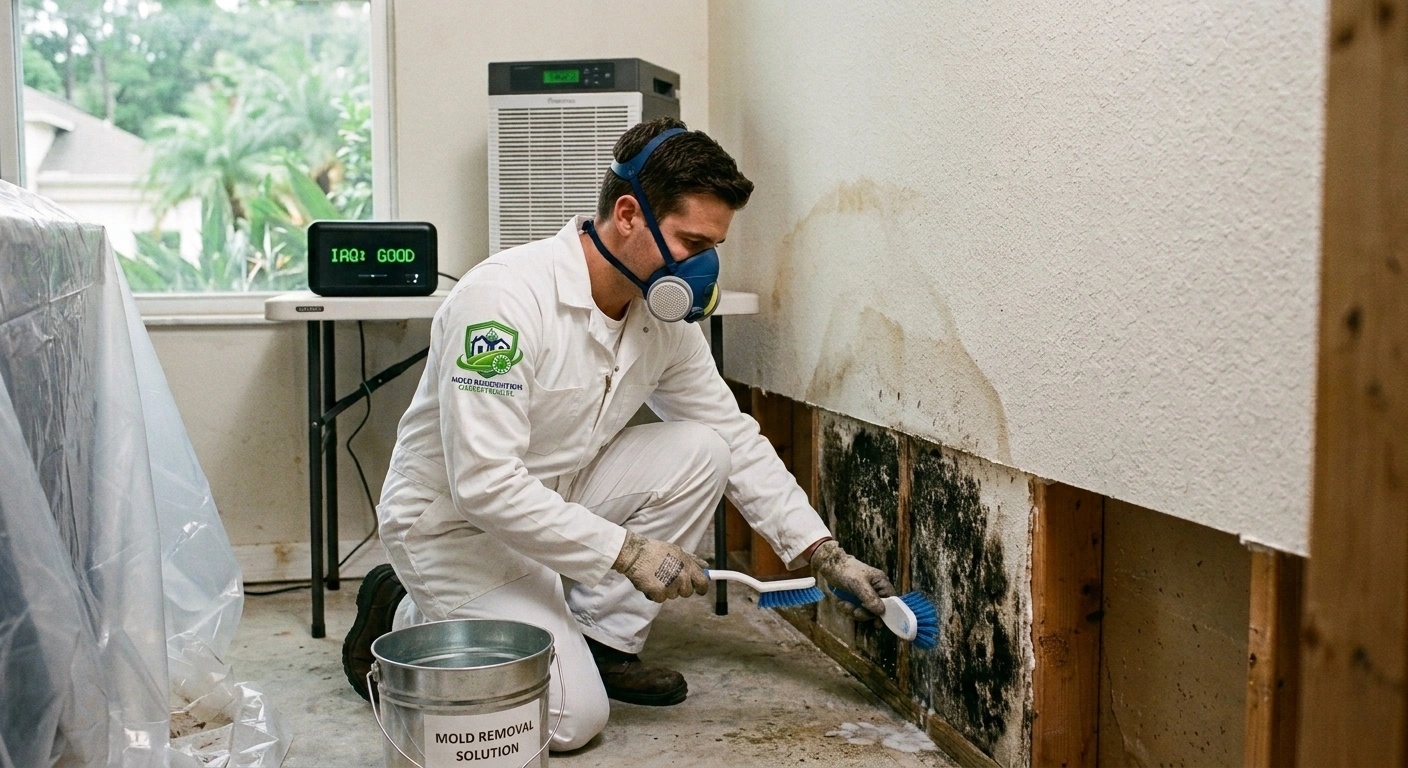
“Black mold” is a general term commonly used for dark-colored mold. One species frequently associated with the term is Stachybotrys chartarum, but color alone cannot determine the species of mold growing in a building.
The more important issue is the moisture that allowed the mold to grow. Mold requires moisture and an available food source, such as drywall paper, wood, or other organic materials. Controlling the moisture source is an important part of preventing mold from returning.
In many situations, homeowners do not need to identify the exact species before addressing visible mold. Testing may be useful in specific circumstances, but the presence of visible mold and moisture is generally more important for deciding what cleanup is needed.
Signs of Black Mold in Your Home
Black mold is not always immediately visible. Some common signs of a possible mold problem include:
If you notice visible mold or ongoing moisture problems, a mold inspection can help determine the source and extent of the issue.
Why Gainesville Homes Can Develop Mold
Gainesville’s climate can create favorable conditions for moisture problems.
High humidity
Gainesville’s long-term average relative humidity reaches about 77% in August, while maximum readings can approach 100%.
Frequent rainfall and storms
Heavy rain can expose weaknesses around roofs, windows, doors, and other areas where water can enter a building.
Shaded areas
Trees and surrounding vegetation can reduce drying around portions of a property after rainfall.
Air conditioning and condensation
HVAC systems normally help control indoor humidity, but clogged drains, condensation, or other system problems can create localized moisture.
Older properties
Older homes may have aging roofs, plumbing, windows, or ventilation components that require attention when moisture problems develop.
The combination of moisture, organic building materials, and insufficient drying can allow mold to grow and spread.
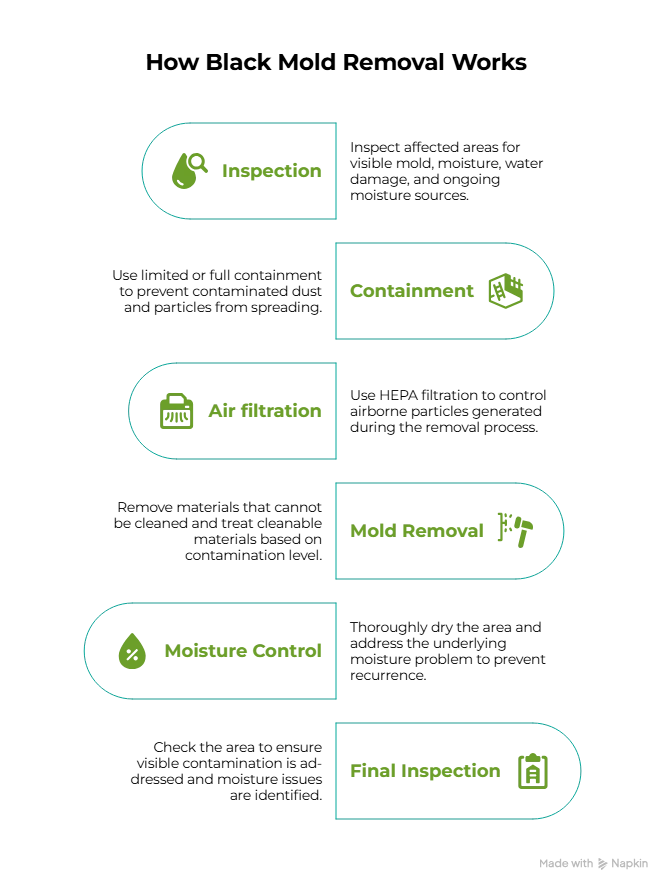
How Black Mold Removal Works
Safe mold cleanup depends on the size of the affected area, the materials involved, and the source of the moisture. EPA guidance recommends different levels of remediation and containment depending on the size and circumstances of the contamination.
Inspection
We inspect the affected areas and look for visible mold, moisture, water damage, and potential sources of ongoing moisture.
Containment
For larger remediation projects, appropriate containment can help prevent contaminated dust and airborne particles from spreading into unaffected areas. EPA guidance describes limited and full containment based on the size and circumstances of the affected area.
Air filtration
HEPA filtration may be used during remediation to help control airborne particles generated during the removal process.
Mold Removal
Materials that cannot be effectively cleaned may need to be removed and properly handled. Cleanable materials are treated using appropriate cleaning methods based on the material and level of contamination.
Drying and Moisture Control
The affected area must be thoroughly dried and the underlying moisture problem addressed. Cleaning mold without correcting the moisture source can allow the problem to return.
Final Inspection
After cleanup, the affected area is checked to make sure visible contamination has been addressed and the underlying moisture issue has been identified.
Get a FREE Estimate From the #1 Mold Removal Company in Gainesville
Health Considerations
Mold can produce allergens and irritants, and some people are more sensitive to mold exposure than others. Possible reactions include sneezing, runny nose, red eyes, skin irritation, and asthma symptoms in people who are allergic to mold.
If you are experiencing ongoing or concerning symptoms that you believe may be related to mold exposure, speak with a healthcare professional. Property inspection and medical evaluation address different parts of the issue.
Is Black Mold Removal Covered by Insurance?
Insurance coverage depends on your individual policy and the cause of the water or mold damage.
Some policies may provide coverage when mold results from a covered sudden event, while exclusions or limitations may apply to long-term leaks, maintenance issues, or other causes. Review your policy and contact your insurance company to determine whether your specific situation is covered.
Documentation such as photographs, moisture readings, and information about the affected area may also be useful when discussing a potential claim with your insurer.
Why Choose Us for Black Mold Removal?
We serve properties throughout Gainesville and Alachua County, including homes, rental properties, and commercial buildings.
Our approach focuses on identifying the moisture source, containing affected areas when appropriate, removing contaminated materials safely, and helping prevent the problem from returning.
Our technicians hold IICRC certification, and we carry a Florida DBPR Mold Remediator License. Florida’s mold-related services regulations define mold remediation as removal, cleaning, sanitizing, demolition, or other treatment of mold or mold-contaminated matter greater than 10 square feet, subject to the requirements and limitations of Florida law.
Areas We Serve
We provide black mold removal services throughout Gainesville and surrounding areas in Alachua County, including:
We also serve nearby communities including Alachua, High Springs, Newberry, Archer, Hawthorne, Micanopy, and Waldo.
Frequently Asked Questions
Call to Action
If you have noticed dark mold growth, persistent musty odors, water damage, or ongoing moisture problems, addressing the issue early can help prevent further damage.
We can inspect the affected area, identify potential moisture sources, and explain what type of cleanup your property may need.