Water Damage & Mold Restoration in Gainesville, FL
Professional water damage and mold restoration for Gainesville homes and businesses. Licensed specialists serving Alachua County.
IICRC-Trained Technicians
Florida Licensed Remediator
Florida DBPR Licensed
When Water Damage Turns Into a Mold Problem
Water damage can create the moisture mold needs to grow, especially when affected materials are not dried quickly. The EPA notes that mold can begin growing within 24–48 hours when wet materials remain damp.
Gainesville’s climate makes this timeline even tighter. UF/IFAS climate data shows average relative humidity running from about 70 percent in spring to 77 percent in August, with readings that approach 100 percent during and after rain. Wet drywall or insulation does not dry on its own in that kind of air, which is why fast water extraction matters as much as the mold cleanup that may follow.
We handle both sides of this problem for homes, rentals, and businesses across Gainesville and Alachua County. Our process starts with stopping and removing the water, then drying the structure completely, and only then addressing any mold that has already started.
Understanding the Different Types of Water Damage
Not all water damage is treated the same way, and the source of the water changes what needs to happen next. The IICRC, the industry organization that sets restoration standards, classifies water intrusion into three categories.
Clean Water
Water from sources such as broken supply lines or overflowing sinks and tubs.
Gray Water
Water that may contain contaminants and can come from sources such as washing machines, dishwashers, or toilet overflows without feces.
black water
Heavily contaminated water, including sewage and flooding from rivers or ground water. It requires the most extensive precautions and removal of affected materials.
This includes sewage backups, flooding from rivers or ground water, and water that has been sitting long enough to support bacterial growth. This category requires the most extensive removal of affected materials and is not something to handle without professional equipment.
Common Causes of Water Damage in Gainesville
How We Handle Water Damage and Mold Together
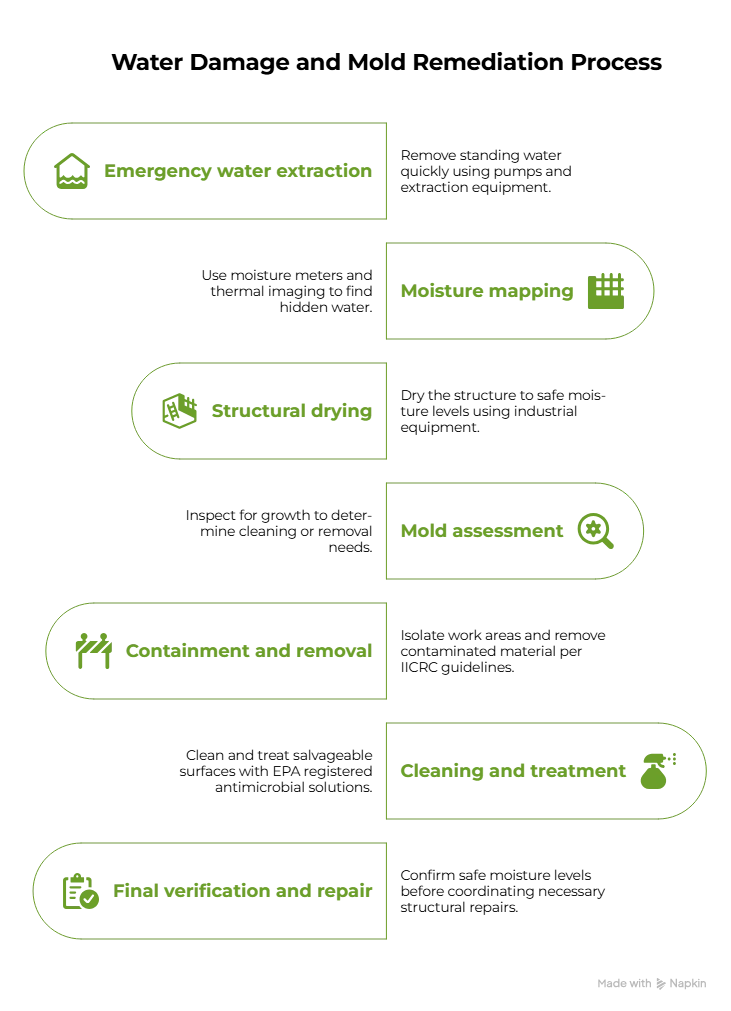
Emergency water extraction.
We remove standing water quickly using pumps and extraction equipment. The faster water is out of a structure, the smaller the area at risk for mold.
Moisture mapping.
We use moisture meters and thermal imaging to find water that has spread beyond what is visible, including inside wall cavities and under flooring.
Structural drying.
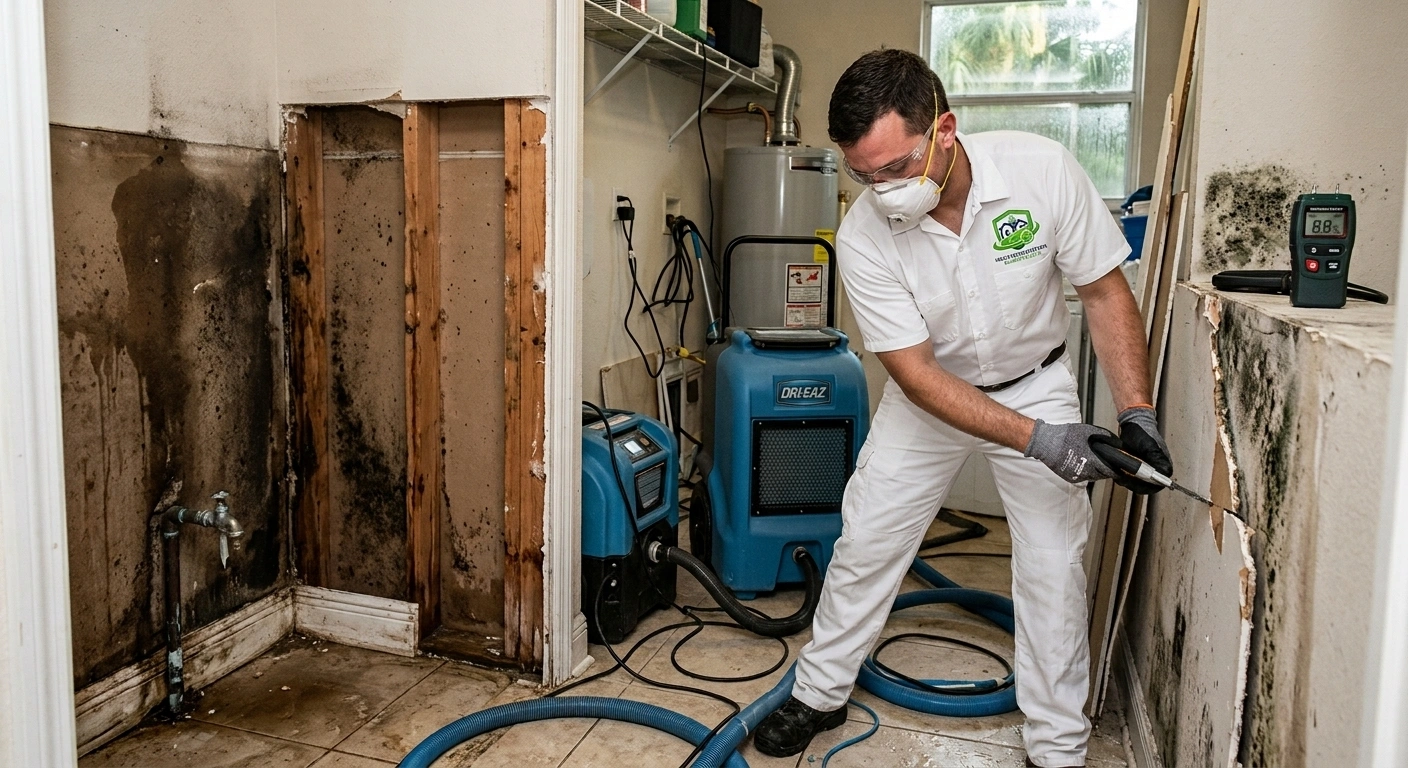
Industrial dehumidifiers and air movers dry the structure to safe moisture levels. We monitor readings daily rather than guessing when a space is dry.
Mold assessment.
If materials were wet long enough for mold to start, we inspect for black mold before deciding what can be cleaned and what needs to be removed.
Containment and removal.
For any active mold, we isolate the work area with plastic barriers and negative air pressure before removing contaminated material, following IICRC guidelines for safe remediation.
Cleaning and treatment.
Surfaces that can be saved are cleaned and treated with EPA registered antimicrobial solutions.
Final drying verification and repair.
We confirm the structure has reached safe moisture levels before any rebuilding begins, and can coordinate drywall, flooring, or other repairs as part of the project.
Signs You May Have Hidden Water Damage or Mold
If any of these apply, it is worth having a mold inspection before it becomes a larger mold problem.
Insurance and Water Damage Claims
Coverage depends on your specific policy and the cause of the water damage. Some homeowners policies may cover sudden events such as a burst pipe or certain storm-related damage, while gradual leaks and maintenance issues may be excluded or limited. Flood damage from rising water typically requires separate flood insurance.
We document moisture readings, photos, and the extent of the damage during each job. These records can help you provide your insurer with information about the restoration work and property damage.
Why Choose Us
We are based at 1008 NW 13th St and serve homes and businesses throughout Gainesville and Alachua County. Our experience includes older homes near Duckpond, newer properties around Haile Plantation, and rental properties near the University of Florida.
Our technicians hold IICRC certification, and we carry a Florida DBPR Mold Remediator License. We follow applicable Florida requirements for mold remediation work and use professional procedures for assessment, containment, removal, cleaning, and moisture control.
We have completed more than 600 residential and commercial projects since 2020. Every job starts with an assessment of the property and the source of the problem, rather than applying the same package to every situation.
Areas We Serve
We provide professional mold inspection and remediation services throughout Gainesville and nearby communities in Alachua County, with same-day assessments available when possible.
Nearby communities we serve include Alachua, High Springs, Newberry, Archer, Hawthorne, Micanopy, Waldo, and Williston.
Frequently Asked Questions
Call to Action
If your Gainesville property has recent water damage, do not wait to see if mold develops. Call us for a free assessment and a clear plan for extraction, drying, and any mold remediation your property needs.