Mold Remediation Gainesville, FL | Mold Removal Services
Trusted mold remediation services for homes and businesses throughout Gainesville, FL.
Get fast, reliable help for mold inspections, removal, and cleanup when you need it most.
IICRC-Trained Technicians
Florida Licensed Remediator
600+ Projects Completed
Mold Won’t Go Away on Its Own. Find the Moisture Causing It.
Mold remediation in Gainesville, FL, for homes and businesses dealing with visible mold, musty odors, water damage, or recurring moisture problems. We inspect the affected area, identify moisture sources, and build a clear plan for containment, removal, cleaning, and drying.
Serving Gainesville and surrounding communities throughout Alachua County.
Our Mold Remediation Services in Gainesville
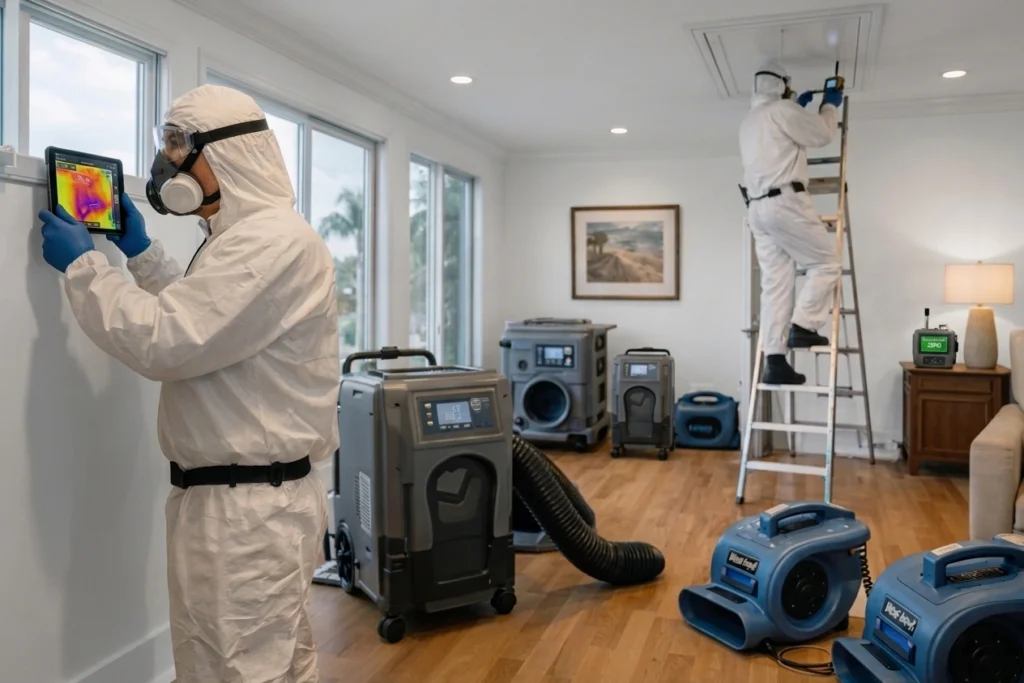
We help homeowners, landlords, and businesses address mold, moisture, and water-related problems. Our services cover everything from inspection and assessment to removal, cleaning, and drying.
Residential Mold Remediation
Houses, condos, and apartments mold after a plumbing or roof leak, flooding or water damage, recurring growth around bathrooms or kitchens, damp attics or crawl spaces, mold behind walls, or moisture problems tied to HVAC equipment. We address the conditions causing the growth, not just the surface stain.
Attic, Crawl Space & HVAC Mold Problems
These areas are easy to miss because moisture isn’t always obvious from inside the living space. Condensation, roof leaks, poor ventilation, plumbing leaks, and ambient humidity can all contribute to damp conditions over time. Air conditioning plays a real role in removing moisture from Florida homes, so a poorly maintained system can quietly work against you.
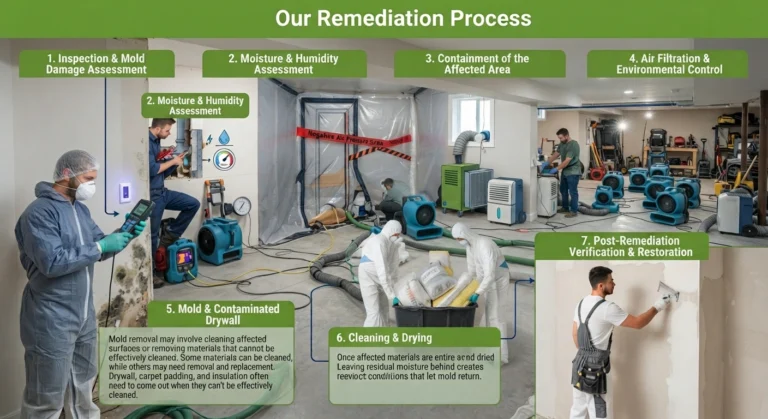
Our Remediation Process
1. Inspection & Mold Damage Assessment: We look at the affected areas and identify visible mold, water damage, staining, odors, and moisture. Where appropriate, moisture measurements and additional inspection methods help determine whether the problem extends beyond what’s visible.
2. Moisture & Humidity Assessment: Mold needs moisture to grow. We work to identify the source. Leaks, flooding, condensation, plumbing problems, roof problems, or poorly vented bathroom and kitchen areas are among the most common causes of indoor dampness. Finding that source shapes everything that happens next.
3. Containment of the Affected Area: When the situation calls for it, we isolate affected areas to limit the movement of mold particles and dust into unaffected parts of the property. The containment approach depends on the size and location of the affected area and the specific work being performed.
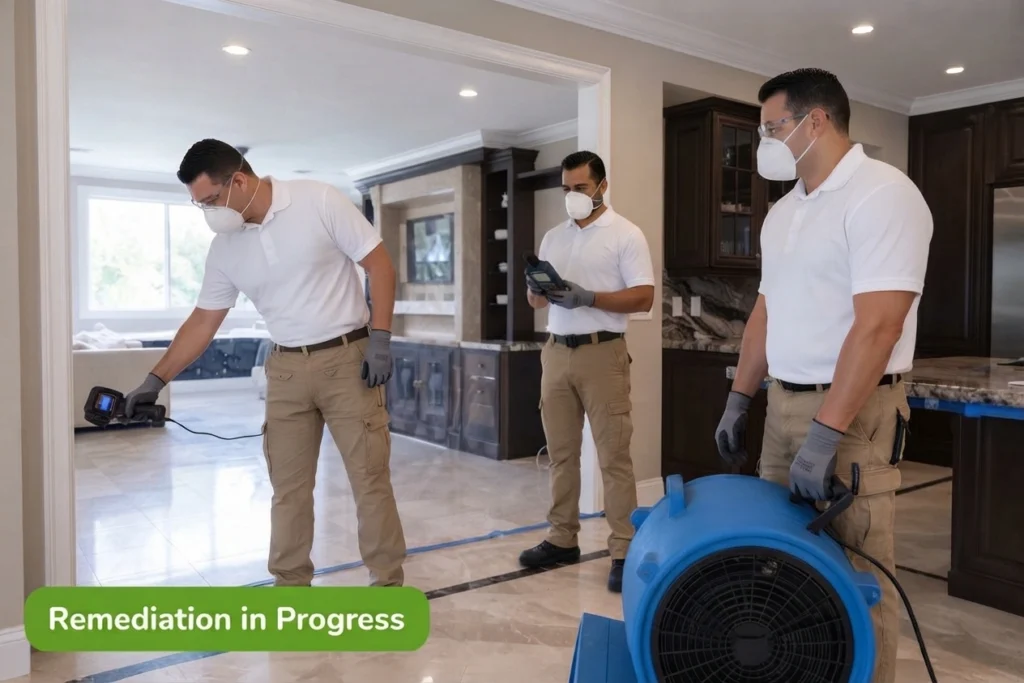
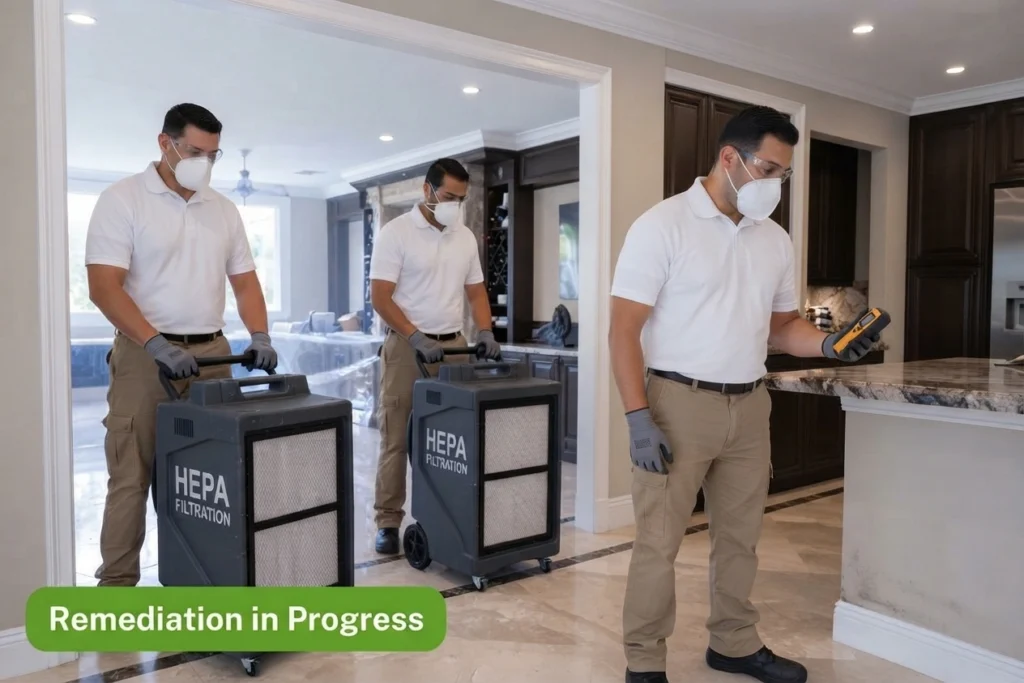
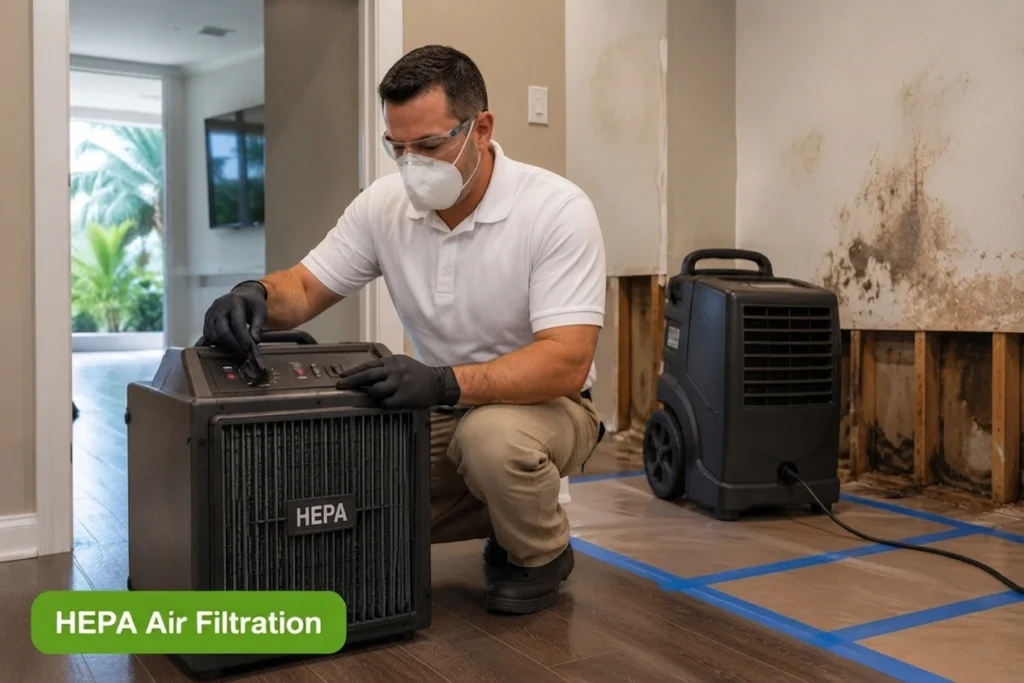
4. Air Filtration & Environmental Control: HEPA filtration, drying equipment, and dehumidification may be used depending on conditions found at the property. This equipment supports the larger process; it isn’t the solution by itself.
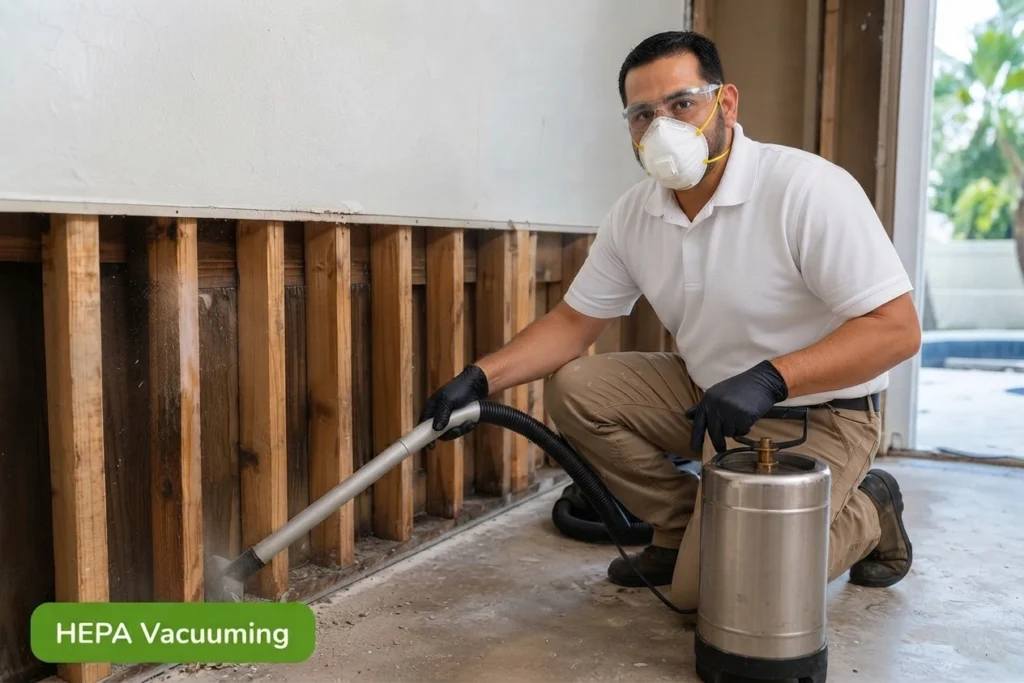
5. Mold & Contaminated Material Removal: Mold removal may involve cleaning affected surfaces or removing materials that cannot be effectively cleaned. Some materials can be cleaned, while others may need removal and replacement. Drywall, carpet padding, and insulation often need to come out when they can’t be effectively cleaned.
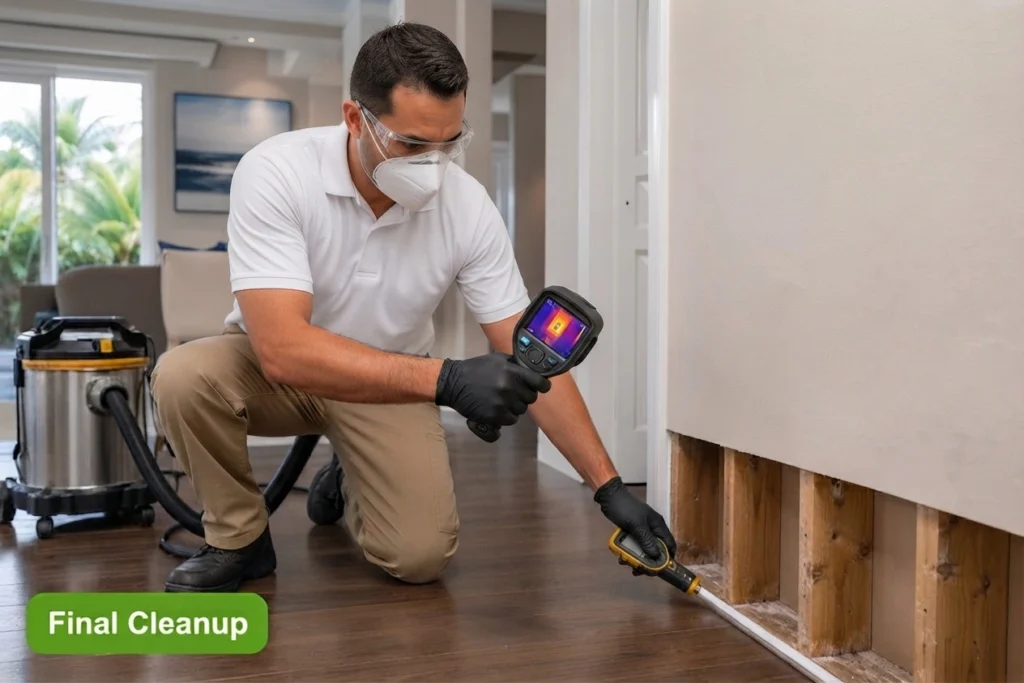
6. Cleaning & Drying: Once affected materials are addressed, the area is cleaned and dried thoroughly. Leaving residual moisture behind creates the exact conditions that let mold return.
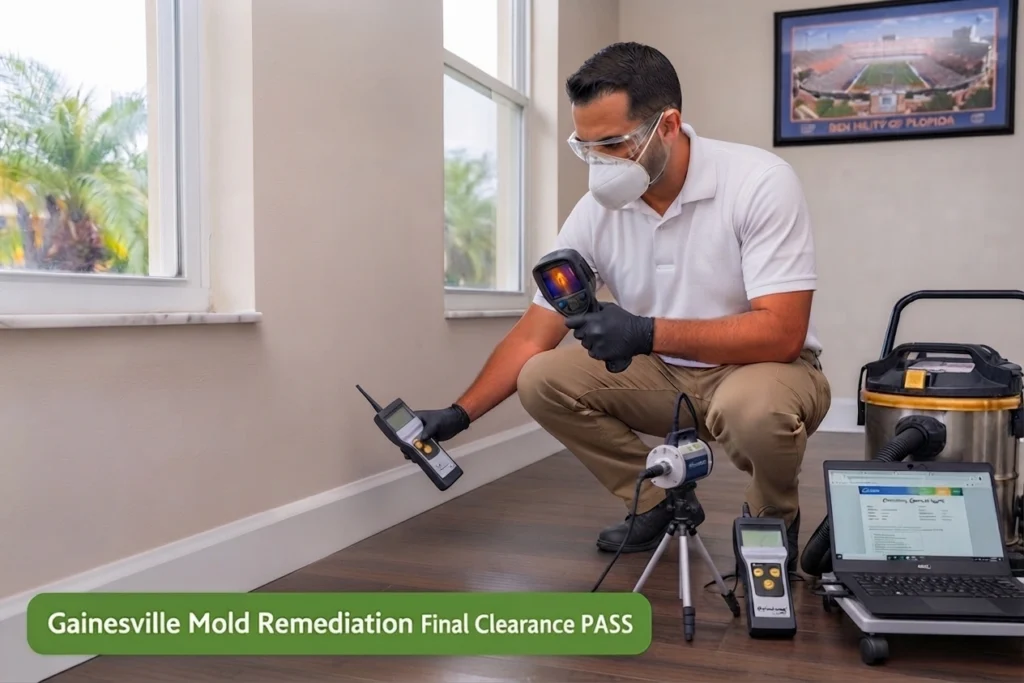
7. Post-Remediation Verification & Restoration: Completed work may require verification or further inspection depending on the situation. Where materials were removed, restoration can include rebuilding walls, flooring, insulation, or other affected portions of the property.
Do You Need Mold Testing, or Just an Inspection?
Not every mold concern requires laboratory testing. The right approach depends on what’s visible, whether moisture is present, whether hidden contamination is suspected, and why the assessment is being done.
Get a professional inspection if you have:
- Visible mold that keeps returning
- A persistent musty odor
- Previous flooding or significant water damage
- A known leak that affected building materials
- Suspected mold behind walls or under flooring
- Persistent moisture or humidity problems
- Concerns before buying or selling a property
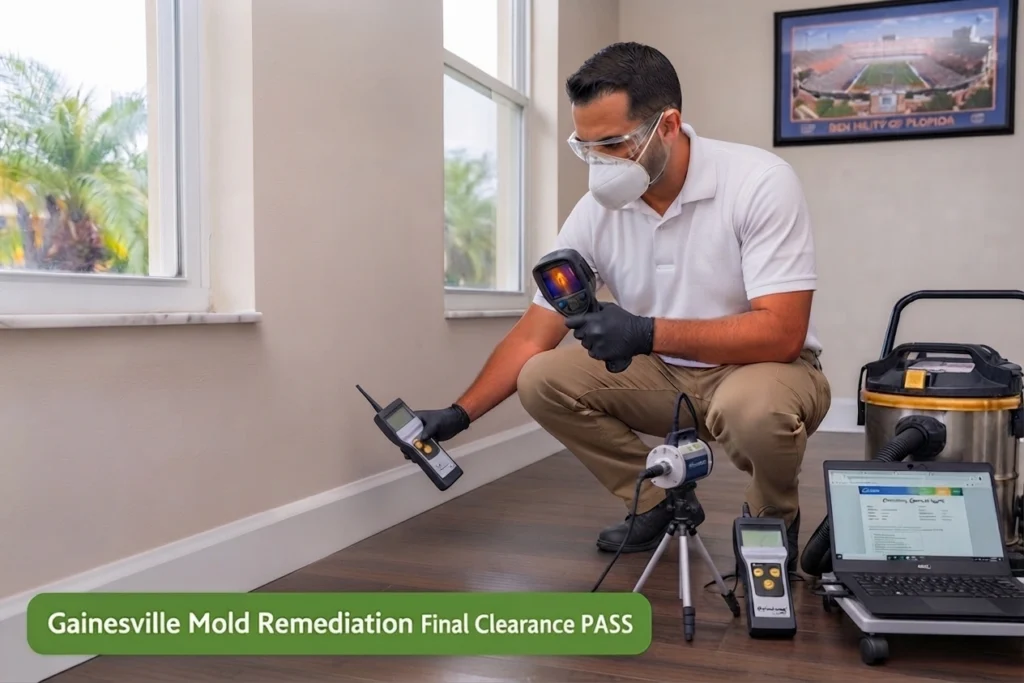
Moisture & humidity analysis answers a more useful question than simply, “Is there mold?” it asks “Why is this area supporting mold growth in the first place?” A hygrometer measures indoor humidity, while moisture meters locate damp materials that aren’t visibly wet. UF/IFAS notes that prolonged high humidity is a real contributor to mold problems, which is why we track it as part of every assessment.
Thermal imaging can identify temperature patterns associated with possible moisture problems. It’s a supporting inspection tool, not a standalone mold test. Findings get weighed alongside visual observations and moisture readings.
Air sampling can provide useful information about airborne particles when there’s a specific reason to collect them. It should answer a question, not be ordered by default just because mold is suspected.
Attic and crawl space inspection matters because these areas hold moisture without obvious signs from inside the living space roof leaks, plumbing issues, condensation, ventilation problems, and damp insulation all deserve a direct look.
A useful inspection report documents the areas examined, visible conditions, moisture findings, suspected sources, any sampling results, and recommended next steps with enough detail that you understand exactly what’s going on, not just a pass/fail verdict.
Why Gainesville Homes Get Mold
Gainesville’s climate is a big part of the moisture picture. Long-term data from UF/IFAS shows average relative humidity ranging from about 70% in April to 77% in August, with maximum values approaching 100%. That doesn’t mean every property will develop mold; it means moisture control deserves ongoing attention, not a one-time fix.
Humidity & poor ventilation
Bathrooms, kitchens, closets, and other low-airflow areas hold moisture longer than they should. Exhaust fans, well-maintained AC, and general humidity control all help reduce these conditions.
Plumbing & roof leaks
A slow leak can keep building materials damp long before anything is visible. Check around plumbing fixtures, ceilings, walls, and areas below roof penetrations any time water staining shows up.
Water damage & flooding
Water that enters a property needs to be addressed fast. FDOH recommends drying wet building materials and carpets within 24 hours where possible and treats moisture control as the key to preventing indoor mold growth.
HVAC condensation
Air conditioning removes moisture as it cools indoor air. Drainage problems, condensation, or a poorly maintained system can quietly work against that, adding unwanted moisture instead.
Attic & crawl space moisture
These spaces are affected by roof leaks, plumbing leaks, condensation, ground moisture, and ventilation conditions, often independent of anything happening in the living area.
Common trouble spots throughout a property:
Get a Free Mold Remediation Estimate in Gainesville
Mold Removal vs. Mold Remediation
| Mold Removal | Mold Remediation |
| Focuses on physically cleaning or removing visible mold growth. | Takes a broader approach to the entire mold problem. |
| May involve cleaning affected surfaces or removing contaminated materials. | Includes inspection, moisture control, containment, removal, cleaning, and drying. |
| Does not necessarily address the source of moisture. | Identifies and addresses the moisture conditions that allowed mold to grow. |
| Best understood as one part of the overall process. | Focuses on preventing the problem from continuing or returning. |
| May not be enough when an underlying leak or moisture issue remains. | Addresses both the affected area and the conditions contributing to mold growth. |
Common Signs of a Possible Mold Problem
You may have a mold or moisture problem if you notice:
Mold spores are naturally present in indoor and outdoor air. The concern begins when moisture creates conditions that allow mold to grow indoors. If you have health concerns related to indoor air or possible mold exposure, speak with a healthcare professional.
Found Mold After Water Damage? Start Here
Stop the leak if it’s safe to do so, or get it repaired quickly. Document the visible damage, avoid spreading contaminated material through the rest of the property, and decide whether the affected area needs professional assessment. For a small area, cleaning it yourself may be reasonable. FDOH uses roughly 10 square feet as a general point at which professional guidance should be considered, especially when significant water damage is involved.
Not sure what your situation needs? We’ll walk through it with you, no cost to talk.
Mold Removal Gainesville for Homes, Rentals & Businesses
Gainesville has a large rental and student housing market connected to the University of Florida and Santa Fe College. From the UF campus and Midtown to Downtown, Archer Road, Butler Plaza, and Newberry Road, property managers and landlords may face mold and moisture problems that require a different approach than a single-family home.
Offices & commercial buildings
Remediation needs to account for occupants, business operations, access, and affected areas without unnecessarily disrupting daily operations.
Rental & multifamily properties
A moisture problem in one unit may require attention to adjacent units, shared building systems, or a recurring source affecting the whole building.
Property manager support
Clear communication, documentation, photographs, estimates, and a defined scope of work make it easier for owners and managers to coordinate a response across multiple stakeholders.
Minimizing business disruption
Wherever practical, the work is planned around the affected area and the property’s normal use, rather than forcing a full shutdown.
How to Choose a Mold Remediation Company in Gainesville
Look past a promise to remove mold quickly, and ask a few direct questions:

Why Choose Us?
Real Gainesville Mold Remediation Projects
Mold problems can look very different from one Gainesville property to another. A damp bathroom near the University of Florida, moisture in a crawl space off Newberry Road, or recurring condensation in a home around Haile Plantation can each require a different approach.
Here are examples of the type of work we document from inspection through completion.
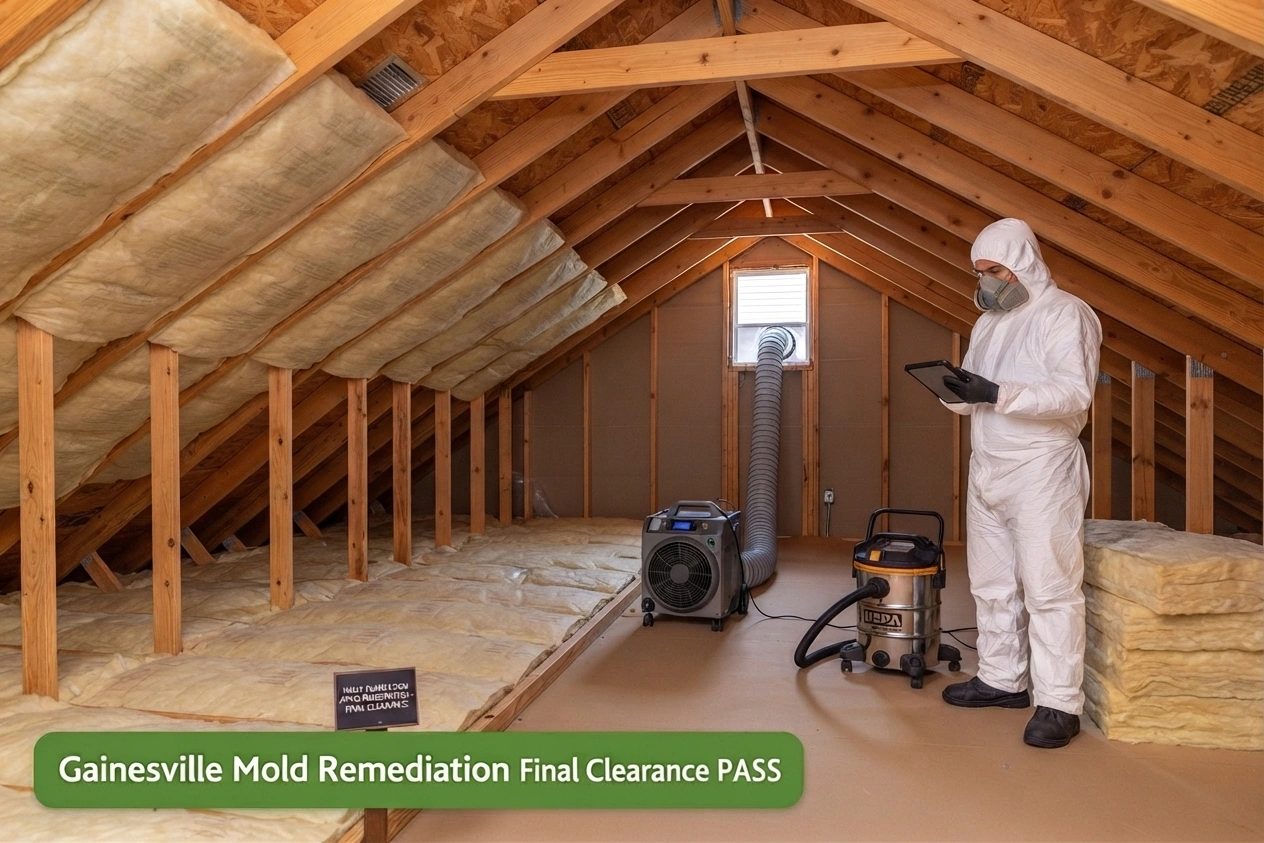
Attic Mold Remediation Near Haile Plantation
The problem:
The homeowner noticed a musty odor upstairs and dark staining around portions of the attic. The issue was first noticed after periods of heavy rain, but there was no obvious active leak from inside the home.
The assessment:
The inspection focused on the attic, roof penetrations, insulation, ventilation, and moisture conditions. Areas with elevated moisture were documented along with the visible growth.
The work:
The affected area was contained before remediation began. Contaminated materials that could not be effectively cleaned were removed; the area was cleaned and drying and moisture control measures were put in place.
The result:
The attic was left clean and dry, with the underlying moisture conditions addressed rather than simply treating the visible staining.
Recurring Bathroom Mold Near the University of Florida
The problem:
A Gainesville homeowner noticed mold returning around a bathroom ceiling and wall even after previous cleaning. The recurring growth was accompanied by a musty odor.
The assessment:
The inspection looked beyond the visible area for moisture, condensation, ventilation problems, and possible water intrusion. Moisture readings were taken where appropriate to determine whether surrounding materials were affected.
The work:
The affected section was contained, damaged materials were addressed according to their condition, and the area was cleaned and thoroughly dried. Ventilation and moisture control were also considered as part of the remediation plan.
The result:
The homeowner received a documented scope of work explaining what had been affected, what was addressed, and what steps could help prevent the same moisture conditions from returning.
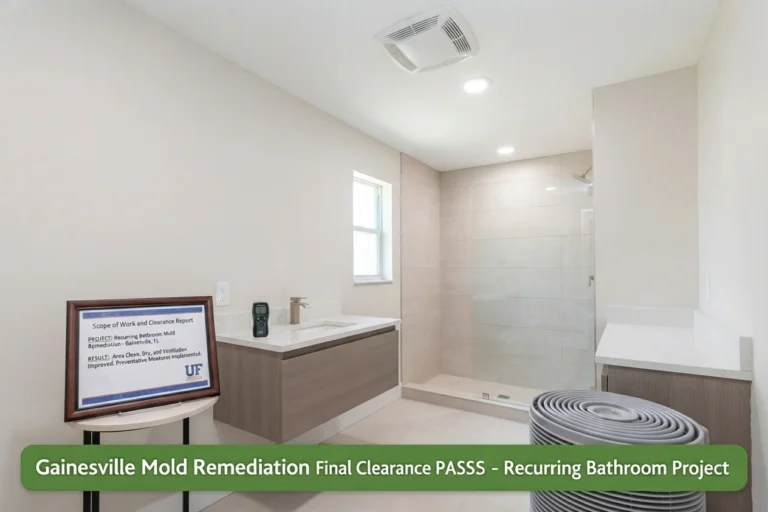
Gainesville Mold Remediation Gallery
See how our technicians inspect, contain, remove, and restore mold-damaged properties using industry-standard remediation methods.
Areas We Serve
We provide professional mold inspection and remediation services across Gainesville and surrounding areas, including same-day assessments in nearby Alachua County communities.
Nearby cities we serve include Alachua, High Springs, Newberry, Archer, Hawthorne, Micanopy, Waldo, and Williston.
Customer Reviews
What Gainesville Property Owners Should Know
Gainesville is closely tied to the University of Florida, UF Health, Santa Fe College, Midtown, Downtown, Archer Road, Newberry Road, Butler Plaza, Celebration Pointe, Haile Village, and the surrounding residential communities. Properties across these areas differ a lot in construction, age, occupancy, and moisture conditions. A student rental near campus faces different issues than a family home near Haile Plantation, and a commercial building near Butler Plaza needs a different work plan than a crawl space in a residential property. That’s why the right remediation plan starts with the actual building and the actual source of moisture, not a generic checklist.
Need Mold Remediation in Gainesville, FL?
Found mold, noticed something musty, or dealing with moisture after a leak? Don’t guess at the cause we’ll help you understand exactly what’s happening and what the right next step is.
📞 Call (352) 565-2700 for an assessment. 📍 1008 NW 13th St, Gainesville, FL 32601
Serving Gainesville and surrounding communities throughout Alachua County, including Archer Road, Butler Plaza, Midtown, Downtown Gainesville, Haile Plantation, Newberry Road, and areas near the University of Florida and Santa Fe College.