Attic Mold Removal Gainesville, FL | Professional Services
Attic mold inspection and remediation for Gainesville homes. Licensed specialists serving Alachua County.
IICRC-Trained Technicians
Florida Licensed Remediator
Florida DBPR Licensed
Why Attics Are a Different Kind of Mold Problem
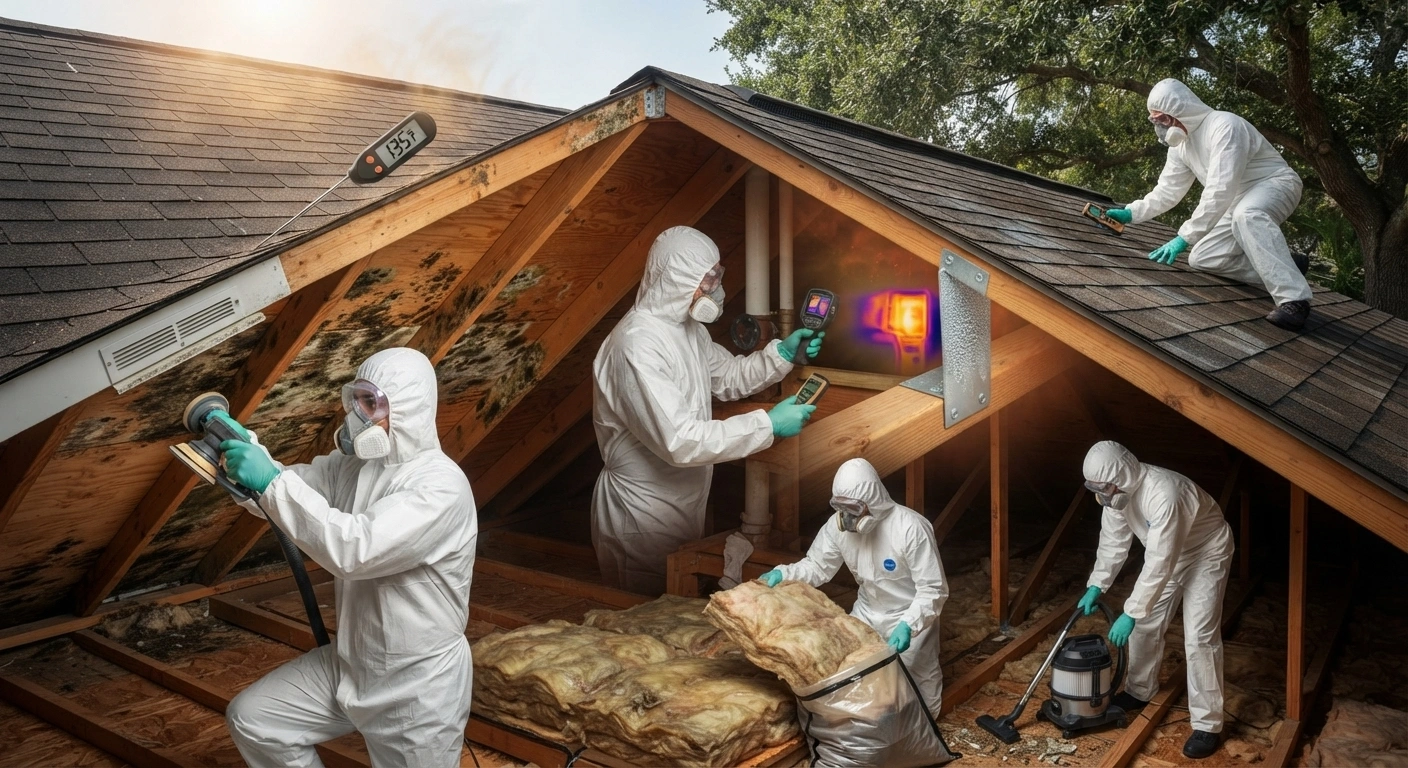
An attic is not like the rest of a house. It runs hotter, it usually has far less airflow than a living space, and it is full of exactly the materials mold needs to grow: wood sheathing, roof decking, and insulation.
In Gainesville, a Gainesville Regional Utilities study of local attics found summer temperatures regularly reaching 120 to 140 degrees, sometimes higher in attics with dark shingles and limited ventilation. That heat does not stop moisture from being a problem. When warm, humid air meets a cooler surface overnight, condensation forms, and Gainesville’s tree canopy keeps roofs shaded and slower to dry after rain than an open lot would be.
We inspect and remediate attic mold for homes throughout Gainesville and Alachua County, and the approach is different from a typical living space job because the environment itself is different.
What Causes Mold to Grow in Gainesville Attics
Roof leaks
Wind, falling branches from Gainesville’s dense oak canopy, and aging shingles all create entry points for water. A leak in a roof deck can soak insulation for weeks before a stain shows up on a ceiling below.
Poor ventilation
Attics need a balance of intake and exhaust airflow, usually through soffit and ridge vents, to move humid air out. Many older Gainesville homes have vents that were blocked over time by insulation or roofing work, which traps moisture instead of letting it escape.
Bathroom exhaust fans vented into the attic instead of outside
This is a common issue in older construction and it dumps warm, humid bathroom air directly into the attic space every time the fan runs.
HVAC equipment located in the attic
Many Gainesville homes have the air handler in the attic, and a condensate line that clogs or a unit that sweats can drip onto insulation and framing for a long time before anyone notices.
Insufficient or damaged insulation
Insulation that is too thin, compressed, or improperly installed allows warm interior air to reach the cooler roof deck, creating the same condensation problem from the other direction.
Signs of Attic Mold
Attic mold is easy to miss because most people rarely go up there. A few signs are worth checking for:
If you have not been in your attic in a while and any of these apply, it is worth having it checked.
Attic Mold vs. Attic Staining
Dark staining on attic wood does not always mean active mold growth. Discoloration can result from past moisture, dirt, aging materials, or other conditions. A professional inspection can help determine whether the staining is consistent with mold and whether an active moisture problem is present.
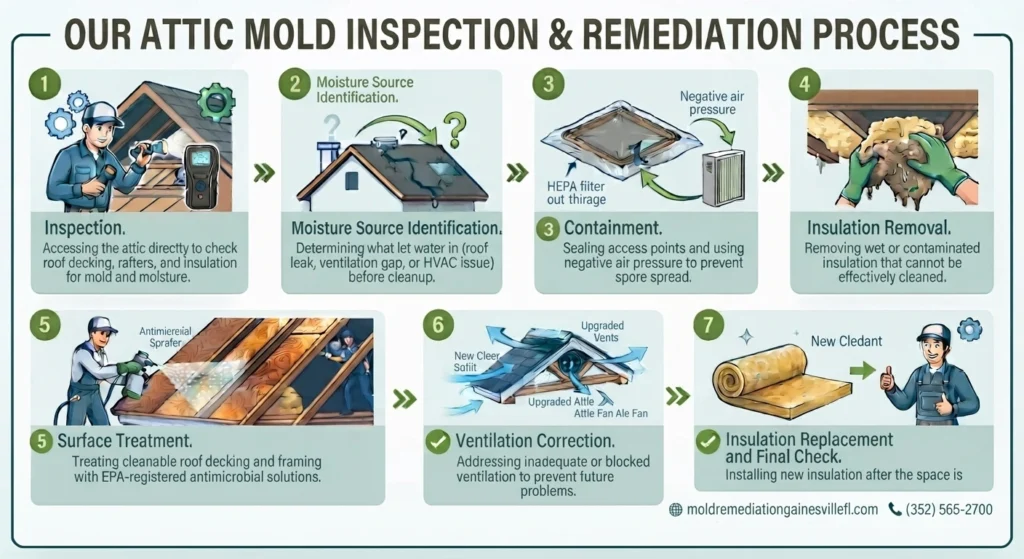
Our Attic Mold Inspection and Remediation Process
Inspection
We access the attic directly rather than relying on a ceiling level guess, checking roof decking, rafters, insulation, and any HVAC components for visible mold and moisture readings.
Moisture source identification
Before any cleanup starts, we determine what let water or humidity into the space, whether that is a roof leak, a ventilation gap, or an HVAC issue, since remediation without fixing the source does not last.
Containment
Attic access points are sealed and negative air pressure is used to keep spores from moving into the living space below during work.
Insulation removal
Wet or contaminated insulation cannot be effectively cleaned and is removed rather than treated in place.
Surface treatment
Roof decking and framing that can be cleaned are treated with EPA registered antimicrobial solutions rather than removed, when the wood itself is structurally sound.
Ventilation correction
If blocked or inadequate ventilation contributed to the problem, we address it as part of the job, since this is often the difference between a fix that lasts and one that does not.
Insulation replacement and final check
New insulation is installed once the space is confirmed dry, and we do a final walkthrough before closing the job out.
Get a FREE Estimate From the #1 Attic Mold Removal in Gainesville
Attic Work Requires Different Safety Precautions
Attic remediation involves conditions that residential mold work in living spaces usually does not. Interior attic temperatures in Gainesville summers can be dangerous for anyone not equipped for it, and the confined space, limited lighting, and exposed insulation all require specific safety protocols. Our technicians use appropriate protective equipment and work in shifts during peak heat rather than treating an attic like any other room in the house.
Why Choose Us
We are based at 1008 NW 13th St and have worked on attic mold issues across Alachua County, from older homes near downtown with original ventilation systems to newer construction near Haile Plantation. Our technicians hold IICRC certification, and we carry a Florida DBPR Mold Remediator License, required under Florida law for remediation projects over 10 square feet.
We have completed more than 600 residential and commercial projects since 2020. We identify what actually caused the problem in your attic rather than treating every job the same way.
Areas We Serve
We provide attic mold inspection and remediation throughout Gainesville and surrounding areas across Alachua County, including:
We also serve nearby communities including Alachua, High Springs, Newberry, Archer, Hawthorne, Micanopy, and Waldo.
Frequently Asked Questions
Call to Action
If you suspect mold in your attic, a musty smell you cannot place, or a roof leak that may not have fully dried, call for an inspection before the problem spreads further.